Beyond Chance: How Lottery Icons Elevates Modern Design Workflows
In today’s digital-first landscape, visual communication is paramount. Every project—whether a website, an app interface, a marketing flyer, or a social media campaign—requires a cohesive visual identity. This often begins with the smallest details: icons. A set of high-quality icons can define the tone, enhance usability, and communicate complex ideas simply. For professionals, creators, and entrepreneurs managing multiple projects, sourcing and managing these assets efficiently is a critical part of the workflow. This is where a comprehensive resource like Lottery Icons becomes not just an asset, but a strategic tool.
What is Lottery Icons and Its Role in the Creative Process
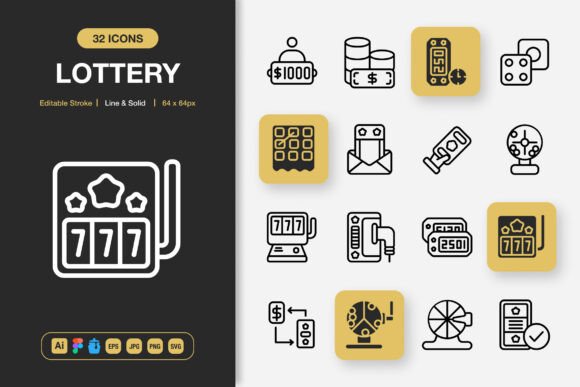
Lottery Icons is not about luck; it's about reliable, high-quality design foundation. It is a meticulously crafted set of minimalist icons designed to be suitable for any project. The collection moves beyond being a mere graphics pack to become an integrated component within a broader creative or professional process. Its design philosophy—clean, adaptable, and minimalist—ensures it fits seamlessly into existing workflows without forcing a stylistic overhaul. For a marketing manager planning a campaign, a developer prototyping an app, or a blogger refining their site, these icons serve as a ready-made visual vocabulary that accelerates the initial design phase and maintains consistency throughout execution.
Integration with Planning and Execution Stages
The utility of Lottery Icons manifests across different stages of a project. During the planning and wireframing stage, using placeholder icons can delay progress. Having a complete, versatile set allows designers and planners to implement final-grade visuals from the outset, making mockups more accurate and client presentations more compelling. During the active execution phase—coding a website, laying out a book, or designing infographics—the icons provide a consistent element that reduces time spent searching for or creating disparate graphics. Post-project, the same set can be repurposed for updates, expansions, or related materials, ensuring brand and style continuity over the long term.
Key Features and Their Practical Impact on Workflows
The listed features of Lottery Icons are not just specifications; they are direct responses to common workflow bottlenecks.
Offering both Line and Solid Style versions means a single icon can adapt to different contexts within the same project—a solid icon for primary buttons, a line version for secondary information—without breaking visual harmony. The Editable Stroke and fully Customizable nature speak directly to the need for control. A brand’s color palette or a specific print requirement can be applied instantly, making the icons a living part of your asset library rather than a static download.
File Format Compatibility and Organization
The inclusion of multiple file types addresses a critical integration step: compatibility. The Source File Adobe Illustrator allows for deep customization by advanced users. The Figma File enables seamless integration into the increasingly popular collaborative UI/UX design process. Iconjar File organization helps teams manage and retrieve icons efficiently, a simple but often overlooked step that saves considerable time during daily work. Providing EPS, SVG, JPG, and PNG files ensures the icons are ready for any output, from high-resolution print (banners, posters, flyers) to web and mobile applications (websites, apps). The Easy Drag and Drop functionality and clear Readme.txt file lower the barrier to entry, allowing even non-design specialists like educators or small business owners to implement them quickly.
Workflow Examples: From Concept to Final Output
Consider a freelance web developer building a site for a client. They begin by structuring the layout in Figma. Using the provided Figma file, they drag and drop Lottery Icons directly into their mockup, establishing a clean iconography early. When moving to development, the SVG files ensure the icons scale perfectly across devices without losing quality. For the client’s accompanying social media assets, the PNG files with transparency are ready for use in graphic design software.
For a publisher working on an educational ebook, the icons can be imported via the EPS or Illustrator files into their page layout software. They can adjust stroke weights to match the text density or change colors to denote different chapters or concepts, all while maintaining a unified visual style across hundreds of pages.
Ensuring Consistency and Quality Control
A major challenge in multi-platform projects is visual consistency. Using a single source like Lottery Icons across a website, mobile app, and print materials guarantees that the icon style remains identical. This is a subtle but powerful factor in building professional credibility and user trust. The High Quality of the assets also eliminates the need for quality control checks on individual graphic elements, freeing up time to focus on the broader user experience or content strategy.
Long-Term Value and Asset Management
Investing in a robust icon set is a decision with long-term workflow implications. Lottery Icons, by virtue of its minimalism and versatility, avoids becoming dated. Its style is foundational, meaning it can serve as the core icon library for years, being supplemented as needed rather than replaced. Organizing these files into a dedicated project asset folder, referenced by the Iconjar library, creates a system. This systematic approach turns ad-hoc graphic searches into a simple, repeatable process: open the library, find the icon, deploy it. For entrepreneurs and small business owners who oversee their own marketing, this reliability is invaluable.
Practical Tips for Smooth Integration
To integrate Lottery Icons effectively, start by auditing your current projects and future plans. Identify the common contexts where icons are needed. Then, familiarize yourself with the file formats relevant to your primary tools. If you use Figma, start with that file. If your work is primarily in print, focus on the EPS and high-resolution PNG files. Create a master folder and organize the sub-folders by file type for easy access. For teams, share the Iconjar file and establish a naming convention if customization is frequent. The goal is to make the icons a natural, almost invisible step in your process—a resource you use without friction.
Beyond the Download: A Tool for Enhanced Productivity
Ultimately, Lottery Icons represents a shift from seeing design assets as disposable items to viewing them as integral workflow components. Its design supports quick implementation, its features address technical hurdles, and its versatility ensures it can meet evolving needs. For the professional seeking efficiency, the creator aiming for consistency, or the business owner requiring quality, it provides a reliable solution that fits naturally into the planning, execution, and maintenance of diverse projects. By reducing the overhead typically associated with iconography, it allows users to redirect their energy toward the more substantive aspects of their work—the content, the functionality, and the overall user experience—where true value is created.