The Strategic Advantage of Four Elements Comparison Percentage Charts
In the realm of business analysis, clarity is currency. Professionals tasked with evaluating multiple variables, from product features to market performance, require tools that distill complexity into actionable insight. Among the myriad of data visualization formats, the Four Elements Comparison Percentage Chart stands out as a specialized instrument designed for a specific, yet common, analytical challenge: the simultaneous assessment of four distinct components.
Unlike a simple bar chart or pie graph, a Four Elements Comparison Percentage Chart is engineered to display the proportional contribution or performance of four key items against a shared benchmark, typically 100%. Each element is represented with its individual percentage value, allowing for an immediate, relative comparison. This format is inherently comparative, moving beyond showing a single data point to illustrating the relationship and balance between a quartet of factors. Its core distinction lies in its constrained focus; it is not for comparing dozens of metrics, but for presenting a clean, focused quadrant of information.
Distinguishing Features and Core Strengths
What separates this chart from other percentage-based visuals is its structural commitment to four elements. A standard stacked bar chart can accommodate many segments, but the visual clutter can obscure comparisons. A multi-pie chart (or donut chart) for four datasets can be effective, but often requires more cognitive effort to cross-compare slices across different circles. The Four Elements Comparison Percentage Chart, often presented as a divided square or a clearly labeled four-part diagram, places all data within a single, unified frame. This creates a natural arena for comparison.
The primary strength of this format is its balance between comprehensiveness and simplicity. It acknowledges that many strategic decisions hinge on the interplay between four pillars—for instance, comparing market share across four regions, budget allocation across four departments, or customer satisfaction scores across four product lines. By limiting the scope to four, it prevents information overload while ensuring the viewer’s attention is directed to the comparative weights of each part. The use of percentages universalizes the data, making it immediately understandable regardless of the underlying absolute numbers.
Where It Excels: Ideal Use Cases
The Four Elements Comparison Percentage Chart is particularly powerful in scenarios requiring a snapshot of balance or distribution. In financial presentations, it can elegantly show the percentage composition of an investment portfolio across four asset classes. In operational reviews, it can illustrate the contribution of four key cost centers to total expenses. For product managers, it can display the breakdown of feature usage among four core functionalities. The chart shines in stakeholder meetings and reports where the narrative revolves around “how these four parts make up the whole.” Its design supports discussions about equity, priority, and resource allocation.
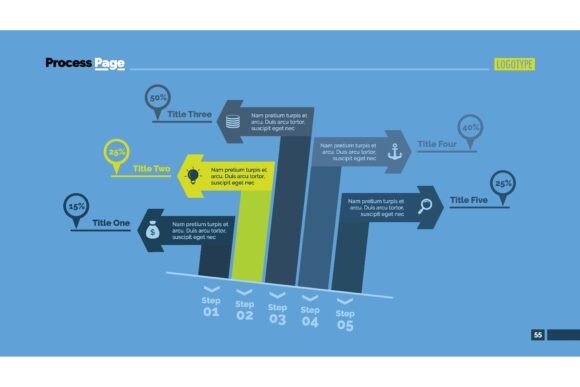
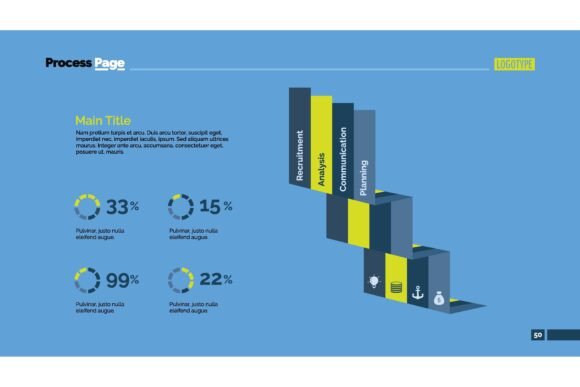
Furthermore, when paired with its companion visual, the Quadrant Comparison Percentage Chart and Staircase, its utility expands into dynamic temporal or hierarchical analysis. While the standard four-element chart offers a static snapshot, the quadrant and staircase variations can show progression, benchmarking against targets, or layered criteria comparison. This toolkit becomes indispensable for representing not just the static distribution, but how that distribution changes over time or meets tiered standards.
Navigating Trade-offs and Limitations
No tool is universally optimal, and understanding the boundaries of the Four Elements Comparison Percentage Chart is key to its effective application. Its most significant limitation is its fixed capacity. If your analysis genuinely involves five or more equally critical elements, forcing them into a four-element chart would be misleading and omit vital data. In such cases, a different visual, like a treemap or a detailed table, might be more appropriate.
Another consideration is the level of detail. This chart communicates proportional relationships effectively, but it often abstracts the underlying raw data. A department showing 25% of costs might be representing $25,000 or $25 million; the chart alone doesn’t convey scale. Therefore, it is frequently best used as a high-level overview graphic, supported by tables or additional charts providing absolute figures. It is a tool for answering “how does this split compare?” not “what are the exact amounts?”
The trade-off, then, is between focused clarity and comprehensive detail. You gain a rapid, comparative understanding of four key areas but lose the granularity and scope needed for more complex datasets. The decision to use it hinges on whether the “story” you need to tell is fundamentally about the interplay of a quartet of factors.
Comparison with Alternative Visualization Approaches
When evaluating visualization options, professionals might consider several alternatives. A radar chart can plot multiple metrics (including four) on different axes, showing profile shapes, but it is less intuitive for direct percentage comparison against a total. Stacked bar charts are excellent for showing composition across categories and can handle more than four elements, but comparing the same segment across different bars (for time series) can be challenging. Simple pie charts with four slices achieve a similar goal, but they can suffer from perceptual issues when slice sizes are similar, and they lack the structural “four-element” framing that emphasizes the deliberate selection of these specific components.
The Quadrant Comparison Percentage Chart, often mentioned alongside the standard four-element version, offers a different value. It typically plots elements in a two-by-two grid based on two criteria (e.g., high/low performance vs. high/low cost), with percentage indicators. This is less about composition of a whole and more about categorization based on two dimensions. The choice between them depends on the analytical question: “How do these parts make up the whole?” versus “Where do these items fall on two key scales?”
Making the Right Choice for Your Data
Determining whether a Four Elements Comparison Percentage Chart is the right choice involves a few practical decision factors. First, examine your data structure. Do you have exactly four categories, components, or entities that collectively represent a meaningful total (100%)? Is the primary insight you wish to communicate the relative size or contribution of each to that total?
Second, consider your audience and medium. For infographics, corporate presentation slides, or executive summary pages in critical reports, this chart’s clean, focused aesthetic is highly effective. It avoids the clutter that can alienate a non-technical audience while preserving analytical rigor. In more detailed, technical documents, it might serve as a summary visual before diving into deeper data tables.
Finally, reflect on the narrative. If your report’s section is titled “Our Four Strategic Pillars” or “Quarterly Performance Across Four Regions,” this chart visually reinforces that conceptual framework. It aligns the data presentation with the analytical storyline. If your narrative involves sequencing, progression, or threshold-based ranking, then exploring the Staircase variation of the quadrant chart would be a more logical fit.
Practical Examples and Application
Imagine a company evaluating its R&D spend across four innovation areas: Core Product Enhancement, New Market Exploration, Process Automation, and Future Technology Prototyping. A Four Elements Comparison Percentage Chart can instantly show that 40% of funds are directed to Core Enhancement, 30% to New Markets, 20% to Automation, and 10% to Future Tech. This visual allows leadership to question the balance: is the allocation aligned with strategic priorities? The chart facilitates that discussion without anyone needing to first decode a spreadsheet.
In a competitive analysis, a business might compare its performance against three main competitors on a key metric like customer retention rate, treating itself as the fourth element. The chart would show the company’s retention rate as a percentage of the total of all four companies’ rates, revealing its relative standing. This shifts the perspective from isolated numbers to a comparative landscape.
Ultimately, the power of effective data visualization lies in matching the form to the function. The Four Elements Comparison Percentage Chart and its related quadrant and staircase diagrams offer a specialized toolkit for a recurring business need: the clear, comparative presentation of a quartet of data points. By understanding its distinct purpose, strengths, and natural limitations, analysts, managers, and strategists can make an informed choice about when to employ it. In situations demanding a focused, balanced view of four driving factors, it becomes more than a chart; it becomes a catalyst for clearer insight and more decisive conversation.