Understanding the Five Steps Process Chart for Business Data
In today’s fast-paced professional environment, clarity is currency. Complex strategies, multi-stage projects, and dense datasets are the daily reality for teams across industries. Communicating these intricacies effectively is a constant challenge. The Five Steps Process Chart for Business Data emerges as a quintessential solution, transforming abstract information into a clear, actionable narrative. This is not just a diagram; it is a dynamic storytelling tool that intertwines creativity with core function, providing an ideal visual framework for infographics, presentation templates, and strategic reports.
The Evolution of Visual Data Communication
Business communication has evolved dramatically from dense text reports and static spreadsheets. The modern workflow prioritizes speed, comprehension, and engagement. Professionals, from entrepreneurs to educators, are inundated with information and have developed an expectation for intuitive, simplified presentation. This shift is driven by changing habits—we are now a visually literate audience accustomed to consuming complex ideas through graphics and interactive media. The Five Steps Process Chart fits perfectly into this landscape. It represents a maturation of business visuals, moving beyond basic flowcharts to designs that are both structurally sound and aesthetically compelling.
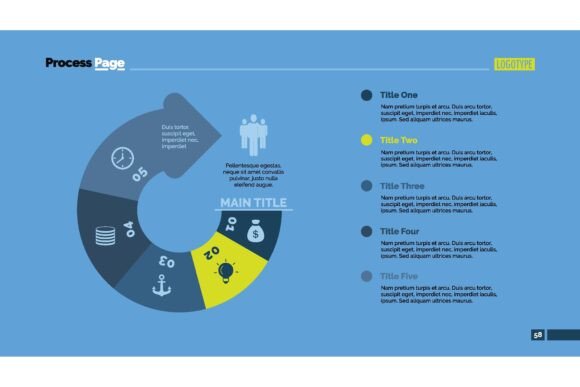
The creative arrow design often featured in such charts is a key evolutionary step. It doesn't merely list steps; it effortlessly guides the viewer through a journey. This directional flow mirrors our cognitive preference for linear progression and storytelling, making the absorption of information on business planning, management protocols, and team collaboration dynamics almost instinctive. As remote collaboration and cross-functional teams become standard, such universally understandable visuals become essential for aligning disparate groups toward a common goal.
Why This Process Chart is Relevant Now
Current trends in technology and market preferences emphasize efficiency and user-centered design. Software platforms for project management and data analytics increasingly offer built-in visualization tools, acknowledging that raw data alone is insufficient. The Five Steps Process Chart for Business Data answers a direct business need: the need to skillfully communicate complex data in an intuitive manner. It serves as a common language within an organization, reducing misunderstandings and ensuring that strategic planning is grounded in a shared visual understanding.
For creators, marketers, and freelancers, this chart is a versatile asset. It provides a ready-made structure to embellish client reports, pitch decks, or blog content, elevating the perceived professionalism and clarity of their work. Its relevance extends to educators and trainers who use it to break down sophisticated business concepts for students or trainees. The chart’s design, which balances creativity with function, aligns with the modern creative practice where aesthetics are not an afterthought but a integral part of effective communication.
Practical Implications for Professionals and Teams
The implications of effectively using a Five Steps Process Chart are concrete and immediate. For a business owner illustrating a new operational workflow, the chart can visually demystify the process for employees, reducing resistance to change and accelerating adoption. A project manager can use it in a presentation to succinctly show stakeholders the phased approach to a major initiative, highlighting dependencies and milestones at each stage. This visual approach often reveals inefficiencies or gaps in the planning phase itself, making it a tool for refinement as well as presentation.
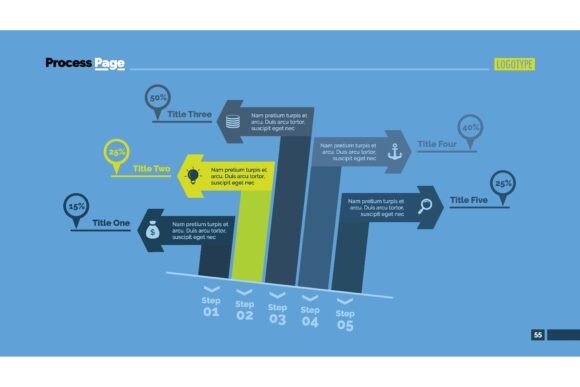
Consider a realistic example: a marketing team planning a product launch. A text-based plan might list tasks chronologically. A Five Steps Process Chart for the launch data, however, could visually encapsulate the five distinct phases—Market Analysis, Content Creation, Channel Activation, Launch Execution, and Performance Review—in a single, cohesive graphic. The creative arrow design would show not just sequence, but the forward momentum and iterative connection between stages. This becomes a central reference point for team collaboration, ensuring everyone, from the copywriter to the analytics specialist, understands their role within the broader, flowing narrative of the project.
Integrating the Chart into Strategic Planning and Management
The chart is perfect for illustrating the essence of strategic planning. Strategy is inherently a process: a set of deliberate steps from vision to execution. A well-designed Five Steps Process Chart forces clarity onto that sequence. It asks the planner to define what the five critical, high-level stages truly are, distilling a sprawling strategy into its core components. This distillation is a valuable exercise in itself, preventing strategic documents from becoming vague or overly broad.
In effective management, communication is paramount. Managers spend a significant portion of their time translating goals into actionable tasks for their teams. This chart serves as a visual intermediary. It can be used in team meetings, pinned to collaborative digital workspaces, or included in onboarding materials to consistently reinforce the process framework. For topics related to management, such as change management or quality assurance cycles, the chart provides a familiar template that teams can quickly recognize and engage with, saving time and reducing cognitive load.
Recommendations for Effective Use
To maximize the benefit of a Five Steps Process Chart for Business Data, consider these grounded recommendations:
- Define with Precision: Ensure each step represents a distinct, substantial phase of the process. Avoid making one step a minor task while another is a monumental phase.
- Leverage the Design: Utilize the visual flow. A creative arrow or pathway should logically represent progression, feedback loops, or decision points where appropriate.
- Keep Data Integrated: The chart is for "Business Data." Incorporate key metrics or outcomes expected at each stage directly into the graphic or its accompanying text. For example, beside the "Analysis" step, note the target market share data to be gathered.
- Adapt for Your Audience: While the structure is universal, the language and specific insights on each step should be tailored. For an executive audience, focus on high-level outcomes; for an operational team, focus on actions and responsibilities.
Ultimately, the power of the Five Steps Process Chart lies in its synthesis of form and function. It is a response to the modern demand for information that is not only accurate but also accessible and engaging. By presenting your business data through this quintessential framework, you move from simply sharing information to guiding understanding, fostering alignment, and illuminating the path forward for your entire team.