The Modern Food Processor Machine: A Kitchen Revolution
In kitchens today, a food processor machine is not just another appliance. It’s a versatile powerhouse, a quiet revolutionizer of meal preparation. Fundamentally, it’s a countertop device with a rotating blade that chops, slices, shreds, purées, and mixes ingredients with incredible speed and uniformity. But its significance changes depending on who’s using it. For some, it’s a time-saving necessity; for others, a gateway to culinary creativity; and for many professionals, a fundamental tool for quality and consistency.
Why This Kitchen Tool Matters to Different People
A busy parent might see a food processor machine primarily as a time and sanity saver, turning the tedious task of chopping onions or making baby food into a ten-second affair. A professional chef, however, evaluates it for precision and volume, relying on its ability to produce consistently thin julienne cuts or perfectly smooth sauces for dozens of servings. Meanwhile, a hobbyist baker values it for achieving specific textures, like the fine crumb of shortbread pastry or quickly blending butter into flour without overworking the dough. The same machine sits in different kitchens, but its role is defined by the user’s goals.
The Beginner's Gateway
If you’re new to cooking or intimidated by complex recipes, a food processor machine can be a fantastic ally. Its primary benefit is demystification. Tasks that seem daunting—making homemade pesto, grating a block of cheese, or preparing a vegetable stir-fry base—become simple and approachable. For a beginner, priorities often include ease of use, clear controls, and safety features. A model with a simple pulse function and easy-to-attach blades can encourage experimentation without fear. It turns “I can’t” into “I just did,” building confidence one puree at a time.
The Creator’s Canvas
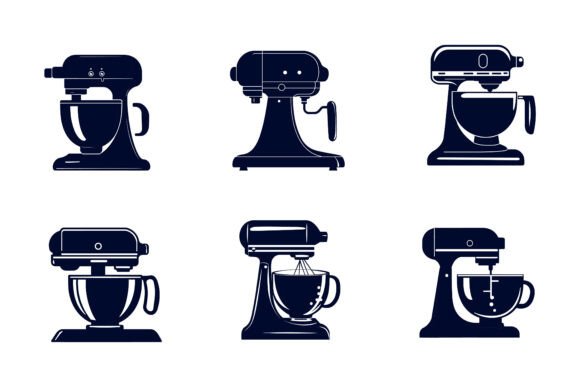
For designers, marketers, bloggers, and freelancers, the term “food processor machine” might not refer to the physical appliance, but to a digital asset representing it. High-quality illustrations and vector graphics of kitchen tools are essential for creating cookbooks, food blogs, instructional manuals, restaurant menus, or app interfaces. Here, the priorities shift entirely from functionality to visual flexibility and professional presentation.
This is where specialized graphic resources, like AI EPS illustration sets, become crucial. Such a collection designed for Mac and Windows users, with neat file organization and perfection in detail, allows a creator to integrate a realistic or stylized image of a food processor machine into any project. They can edit it, change colors, and modify elements easily to match a brand’s palette or an infographic’s theme. For a professional working on a food safety pamphlet or a culinary school’s website, having a scalable, editable vector of the appliance means ensuring visual consistency across all materials, from print to web.
Practical Priorities Across the Spectrum
Whether considering the physical tool or its digital representation, different users weigh factors differently.
- Speed & Efficiency: The entrepreneur running a small catering business needs a physical machine that processes large batches quickly and reliably. Every minute saved translates to cost efficiency.
- Quality & Consistency: An educator teaching nutrition classes might use a food processor to demonstrate uniform cutting techniques, emphasizing how tool design affects food texture and cooking results.
- Creativity & Flexibility: A hobbyist exploring fermented foods might use it to finely chop vegetables for kimchi, valuing the machine’s ability to handle different consistencies. Similarly, a graphic designer values the flexibility of an editable EPS file to craft unique icons for a cooking app.
- Long-Term Usefulness & Cost: A consumer looks at durability, warranty, and versatility over years. Does it have attachments for future needs? For a digital asset buyer, the long-term value lies in the license—can the illustration be used in multiple future projects for commercial gain?
For Professionals and Business Owners
In a commercial setting, a food processor machine is evaluated with a cold eye on ROI. Does it reduce labor costs? Does it improve product uniformity, which enhances brand reputation? Can it handle the daily workload without failure? The choice is often between specialized industrial models versus robust domestic ones scaled for business. For the digital side, a business owner creating their own marketing materials needs illustration sets that are suitable for print, web, symbols, and apps—a single purchase that serves all mediums, ensuring brand cohesion and saving on repeated graphic design fees.
Aligning the Tool with Your Needs
Identifying whether a food processor machine—physical or illustrative—matches your needs starts with a simple question: What problem am I solving?
- Are you aiming to save time on daily meal prep? Look for a physical unit with a large capacity and quick-clean features.
- Do you need to produce professional-level results for clients or students? Prioritize precision blades and motor power in a device, or high-detail, scalable vector files for your designs.
- Is your goal creative exploration in cooking or design? Seek a machine with varied attachments for different tasks, or an illustration set with a neatly organized layer structure that allows easy color changes and modifications.
- Are you evaluating for commercial, long-term use? Research durability, serviceability, and commercial licensing terms for digital assets.
For many, the perfect fit is a combination: a reliable physical appliance to create the food, and high-quality digital assets to beautifully present, teach, or sell the concept. They serve different stages of the same journey—from creation to communication.
Ultimately, the value of a food processor machine, in any form, lies in its ability to augment human effort. It takes the repetitive, the difficult, or the visually complex and simplifies it, freeing up time and attention for the parts of cooking or creation that truly require a personal touch: the seasoning, the presentation, the storytelling. It’s a tool that supports, rather than replaces, the skill and intention of the person using it.