The Chef Hat: A Symbol of Creativity and Craft
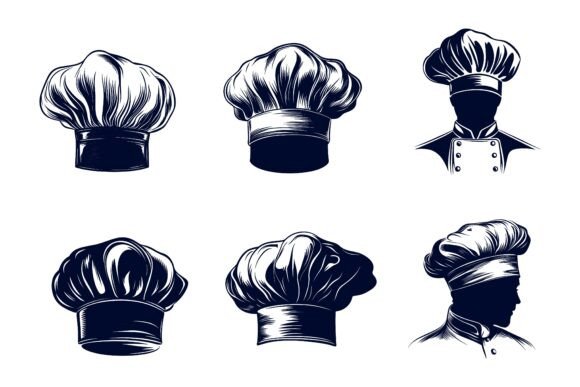
The Chef Hat, more than just an iconic culinary emblem, is a versatile symbol of craft, precision, and welcome. In design, it becomes a powerful visual tool, representing not only food and hospitality but also expertise, service, and the art of creation itself. This simple, recognizable shape unlocks a world of creative communication, adaptable to countless projects and messages.
Unlocking Creative Possibilities with a Classic Symbol
What makes a graphic element like the Chef Hat truly useful is its inherent flexibility. Its clean lines and distinct silhouette allow for endless reinterpretation. You can stylize it to fit a minimalist tech brand discussing "service recipes," or embellish it for a vibrant bakery’s marketing materials. The key is to see it not just as a hat, but as a container for ideas. It can symbolize a "recipe for success" in a business infographic, denote a user-friendly feature in an app interface, or serve as a welcoming badge on a community website.
Consider altering its context. Pair the Chef Hat with tools from other professions—a paintbrush or a wrench—to communicate hybrid skills or interdisciplinary projects. Modify its form: a deconstructed, linear version for a modern editorial piece on design philosophy, or a stacked series of hats to represent team hierarchy or growth stages. The graphic’s strength lies in its familiarity, which you can then subvert or reinforce to suit your specific narrative.
Practical Applications Across Media and Platforms
This adaptability translates directly into practical, cross-platform utility. For print, the Chef Hat can be the cornerstone of a cohesive identity. Think restaurant menus, event programs for cooking workshops, or packaging for gourmet products where consistency in detail is paramount. In these applications, a well-organized, editable file ensures every instance of the icon maintains perfect visual harmony, from a tiny footer symbol to a large poster centerpiece.
For digital environments, its utility expands further. Use scalable, crisp versions as interactive elements in web design, perhaps as a toggle for a "services" section. Integrate it into mobile app icons or within an educational platform’s module on life skills. Its suitability for infographics is particularly potent; a sequence of Chef Hat icons can guide a viewer through a step-by-step process, literally "chef-ing" the information. The ability to easily edit colors means you can align it instantly with any brand palette or to create visual categories within a single project.
Tailoring the Icon for Your Specific Audience
How you implement the Chef Hat should be dictated by whom you are speaking to. For entrepreneurs and small business owners, it might function as a badge of hands-on craftsmanship and personal attention in their branding. Marketers could employ it in campaigns metaphorically, representing the "perfect blend" of strategies or the "special ingredient" in a service.
Educators and publishers might use it in materials to denote practical activities, life skills tutorials, or sections on methodology. Designers and freelancers appreciate the neat file and layer structure for efficiency, allowing rapid prototyping and iteration without wrestling with messy assets. Hobbyists and creators find inspiration in its simplicity, using it as a base for personal projects like custom labels, blog graphics, or community club logos, where modifying the icon to reflect their unique style is straightforward.
Maintaining Clarity and Effectiveness in Your Designs
While creativity is encouraged, the goal is always clear communication. When adapting the Chef Hat, keep the core recognition intact unless your creative concept deliberately challenges it. Consistency is your ally. If using multiple variations across a project, establish a logical rule—perhaps all hats share the same outline weight or a common color accent—to maintain a professional, organized feel.
Remember the context. A detailed, textured hat might be perfect for a high-end print brochure but could lose effectiveness as a small web button. Opt for simpler, bold forms for UI/UX symbols to ensure instant comprehension. Originality comes from how you use the symbol, not necessarily from radically altering its form. A Chef Hat placed next to unexpected text, integrated into a custom pattern, or animated in a subtle loop can feel fresh and engaging without compromising its utility.
A Foundation for Ready-to-Use Creativity
Ultimately, a resource like this provides a foundation. It removes the technical barrier of creating a perfect vector symbol from scratch, offering a starting point that is already polished and precise. This lets you focus your energy on the application: the idea, the layout, the message. You are free to experiment with color psychology—using warm reds for excitement, cool blues for professionalism—or to combine it with other elements to build a more complex visual story.
Whether your project demands a single, impactful symbol or a series of coordinated icons, having a meticulously crafted, editable starting point accelerates the creative process. It ensures that from the first sketch to the final output on any platform, your visual language remains coherent, sharp, and purposefully designed. The Chef Hat, in this sense, is more than an illustration; it’s a ready-made component for your creative toolkit, waiting to be tailored to your vision.